Best Festival Event Planning Software in 2026 (Compared)
Compare the best festival planning software in 2026, from map-based tools to all-in-one platforms. Discover how modern event systems are moving towards connected workflows — and what to look for when choosing the right solution.

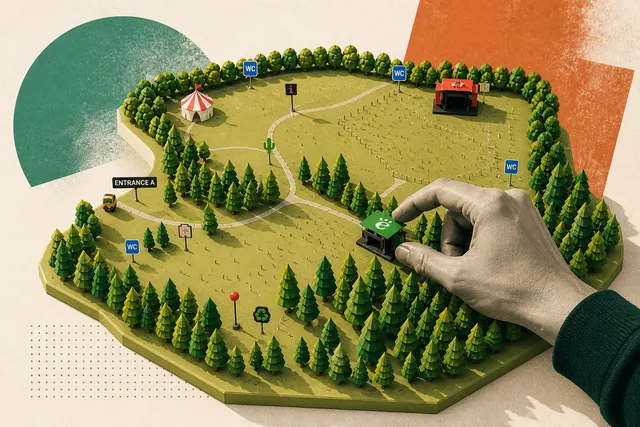
Planning a festival in 2026 is no longer about spreadsheets, emails and static maps. Modern events are complex systems – with vendors, performers, infrastructure, schedules and attendees all needing to stay aligned in real time.
That’s why more organisers are turning to festival planning software and event management platforms. But not all tools solve the same problems.
In this guide, we break down the best festival event planning software in 2026 – and what actually matters when choosing the right platform.
OnePlan
 triggerbox
Best for: Large-scale operational planning
OnePlan is a map-first event planning platform designed for detailed planning and logistics. It’s widely used for large-scale events where infrastructure, safety and coordination are critical.
It focuses on infrastructure planning, safety and operations, and collaboration across large teams.
Key features include:
- GIS-style site planning
- Infrastructure mapping
- Scenario planning
- Operational workflows
Limitations:
Primarily internal-facing, with no built-in attendee experience or event website publishing.
Eventplot
 Eventplot
Best for: Connected planning and publishing in one system
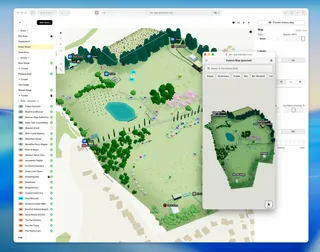
Eventplot takes a different approach to traditional festival management software. Instead of stopping at planning, it connects everything – from your internal setup to what attendees actually see.
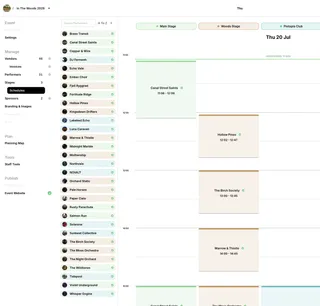
You plan your event once, and it becomes your internal planning system, your live site map, and your public event website – all kept in sync automatically.
What this means in practice is far less manual work. Instead of copying data between tools or rebuilding the same information in multiple places, your entire event stays connected. Vendors update their details once, schedules stay in sync, and your site map, team view and public website all reflect the same live data. This kind of joined-up approach is becoming increasingly important as events grow in scale and complexity, with organisers needing clearer visibility and faster coordination across teams and systems.
Why it stands out:
Most event planning tools help you organise your event. Eventplot helps you run it and publish it at the same time – reducing duplication and keeping everything aligned.
Eventbrite
Best for: Ticketing and event promotion
Eventbrite is one of the most widely used event management tools for creating events and selling tickets online. It allows organisers to publish events quickly and manage registrations, payments and promotion.
Key features include:
- Ticket sales and payments
- Event promotion tools
- Built-in marketplace discovery
- Attendee management
Limitations:
No site planning, vendor coordination or operational planning features.
Whova / EventMobi
Best for: Attendee engagement and event apps
These platforms focus on the attendee experience layer – including mobile apps, schedules, networking and messaging.
They’re typically used alongside other event planning software, rather than replacing them entirely.
A Shift in 2026: Connected Systems
The biggest shift in event tech isn’t better tools – it’s fewer of them.
Festival planning has long relied on disconnected workflows: plan your site, export it, rebuild it elsewhere, then chase updates across multiple versions. It works, but it’s slow and increasingly fragile as events grow in complexity.
In 2026, organisers are moving towards connected systems – where everything lives in one place and updates in real time. Your site map, vendors, schedule and public-facing content are all linked, so when something changes, it updates everywhere. Not exported. Not rebuilt. Just updated.
This shift isn’t just theoretical – it reflects a broader move across the industry towards unified event platforms and real-time data systems, reducing silos and improving accuracy. blackthorn.io
At the same time, the wider event management software market is growing rapidly, driven by demand for integrated, scalable platforms and real-time attendee experiences. thebusinessresearchcompany.com
That’s exactly the direction newer platforms like Eventplot are built around – connecting planning directly to what your team and attendees actually see.
Final Thoughts
Festival planning isn’t getting simpler – but the way you manage it is. The shift towards connected event planning software means less duplication, fewer tools, and real-time visibility across everything, helping teams move faster and stay aligned. As events become more data-driven and integrated, organisers are increasingly moving away from fragmented tools towards unified systems that reduce complexity and improve outcomes.
Because the goal isn’t just to plan an event – it’s to run it smoothly.
And increasingly, the best way to do that is with one connected system, not many.