
How to plan a festival (step-by-step guide)
Planning a festival involves organising your site layout, vendors, stages, and schedule — and making sure everything works together on the day.


Planning a festival involves organising your site layout, vendors, stages, and schedule – and making sure everything works together on the day.
Most organisers still rely on a mix of spreadsheets, documents, and static maps. These tools don’t connect, which makes planning harder and the attendee experience less clear.
At Eventplot, we’re building a platform that brings planning, layout, and publishing into one place – so your event plan becomes the experience attendees see.
1. Define your event
Start with the basics:
- Type of event (music, food, community)
- Expected attendance
- Location and constraints
This sets the foundation for your entire plan.
2. Plan your festival layout
Your site layout drives everything.
You need to define:
- Stage locations
- Vendor areas
- Entrances and exits
- Facilities (toilets, bars, seating)
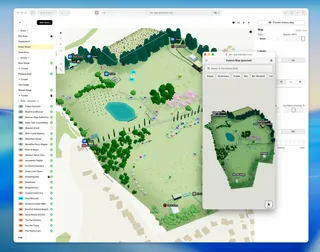
Most organisers use PDFs or sketches, which are hard to visualise.
A better approach is using a visual 3D layout – like in Eventplot – to understand space, flow, and scale clearly.
3. Organise vendors and partners
Create a structured list of:
- Food vendors
- Sponsors
- Market stalls
Track:
- Contact details
- Requirements
- Placement
In many setups, this data is disconnected from the map. Eventplot connects it directly to the layout.
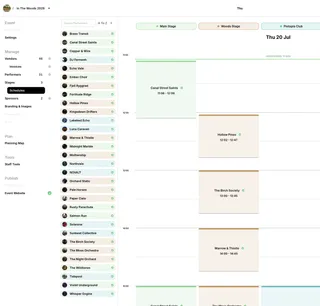
4. Build your schedule
Your schedule should connect to:
- Stages
- Performers
- Locations
This allows you to:
- Avoid conflicts
- Understand crowd movement
- Manage flow across the site
5. Manage logistics
Key logistics include:
- Power
- Security
- Access routes
- Waste management
These are often managed separately, which adds complexity.
6. Create a festival map
Most festivals still use:
- Static PDFs
- Printed maps
These are:
- Hard to read on mobile
- Not interactive
- Difficult to update
7. Publish your event
You’ll need:
- A website
- Schedule
- Map
- Vendor information
Traditionally, these are created separately.
With Eventplot, everything is connected – so your planning becomes your public event experience.
Final thought
Festival planning is often fragmented across tools.
Bringing layout, data, and publishing together – especially in a visual 3D environment – makes planning easier and improves the attendee experience.
Learn more:
https://eventplot.com